
- komal sharma
- 30 Jul 2026
Pralhad Joshi Education Minister: Biography, Qualification, Age, Political Journey & Latest Update (2026)
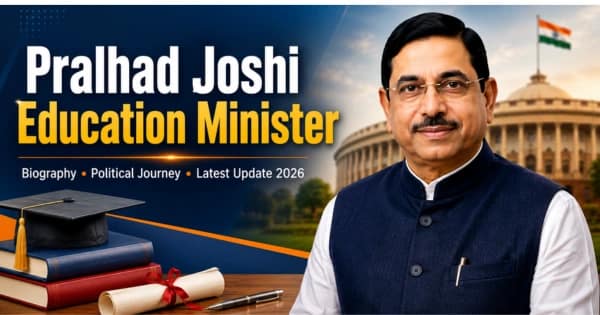
The appointment of Pralhad Joshi as education minister has emerged as one of the most significant political developments in India in 2026. Following the latest Union Cabinet reshuffle, Pralhad Joshi, education minister, has been entrusted with leading the Ministry of Education, a department that shapes the future of millions of students, teachers, schools, colleges, and universities across the country.
Education plays a crucial role in India’s development. Under Pralhad Joshi, education minister, the Ministry of Education is expected to focus on implementing the National Education Policy (NEP), strengthening higher education, promoting digital learning, improving examination systems, and encouraging research and innovation. These areas remain central to India’s long-term educational reforms.
Pralhad Joshi, education minister, is a seasoned politician with decades of parliamentary experience. Before taking charge of the Education Ministry, he successfully handled several key portfolios in the union government, making him one of the most experienced leaders in the cabinet. The appointment of Pralhad Joshi as education minister reflects the government’s confidence in his administrative skills, governance experience, and leadership.
In this article, you’ll learn everything about Pralhad Joshi, education minister, including his biography, age, educational qualifications, political journey, achievements, responsibilities, major education reforms, and the latest developments related to his role as India’s new Union education minister.
Who Is Pralhad Joshi?
Pralhad Joshi Education Minister Pralhad Venkatesh Joshi is a senior Bharatiya Janata Party (BJP) leader and a five-time Member of Parliament from the Dharwad constituency in Karnataka. Over the years, he has earned recognition as an experienced parliamentarian and an efficient administrator.
Throughout his political career, Pralhad Joshi, education minister, has handled several major ministries, including Parliamentary Affairs, Coal, Mines, Consumer Affairs, Food & Public Distribution, and New & Renewable Energy. His ability to manage multiple responsibilities has made him one of the most trusted faces of the union government.
As Pralhad Joshi, education minister, he is now responsible for guiding India’s education system, overseeing policy implementation, supporting educational institutions, strengthening the National Education Policy (NEP), and improving opportunities for students across the country. His leadership is expected to play a key role in shaping the future of education in India.
Quick Profile
| Details | Information |
|---|---|
| Full Name | Pralhad Venkatesh Joshi |
| Current Position | Union Education Minister |
| Political Party | Bharatiya Janata Party (BJP) |
| State | Karnataka |
| Constituency | Dharwad |
| Profession | Politician |
| Experience | Senior Union Minister and Parliamentarian |

Why Is Pralhad Joshi in the News?
Pralhad Joshi Education Minister became the center of national attention after being appointed as the Union Education Minister during the latest cabinet reshuffle. His appointment has sparked widespread discussion among students, educators, and political observers, as many are eager to see the vision and priorities of Pralhad Joshi Education Minister for India’s education sector.
The Education Ministry is one of the most important departments in the Government of India because its policies directly affect students, teachers, educational institutions, and competitive examinations. Under Pralhad Joshi, education minister, the ministry is focusing on several major priorities, including:
- National Education Policy (NEP) implementation
- Examination reforms
- Digital education initiatives
- Skill development
- Research and innovation
- Higher education quality
- Teacher training
- Artificial Intelligence in education
Because of these ongoing initiatives, the leadership of Pralhad Joshi, education minister, is being closely watched by students, parents, educators, and policy experts.
Early Life and Background
Pralhad Joshi Education Minister Pralhad Venkatesh Joshi was born in Karnataka and has remained closely connected with the people of the state throughout his public life. Before entering national politics, Pralhad Joshi Education Minister actively participated in social and organizational work, gaining valuable experience at the grassroots level.
His political career did not rise overnight. Instead, Pralhad Joshi, education minister, built his career through years of dedication, organizational discipline, and public service. Working closely with local communities helped him understand governance, administration, and public policy from the ground level.
His consistent efforts eventually earned him greater responsibilities within the Bharatiya Janata Party. Over time, Pralhad Joshi, education minister, established himself as a dependable leader known for his coordination skills and practical approach to governance.
Educational Qualification
Many people search online to know about Pralhad Joshi Education Minister educational qualifications after his appointment as Union Education Minister.
Although Pralhad Joshi Education Minister is widely recognized for his political achievements, his educational background has contributed to his understanding of governance, policymaking, and public administration. His combination of academic knowledge and decades of political experience has helped him manage several important ministries at the national level.
As Pralhad Joshi Education Minister, his role extends beyond policymaking. He oversees efforts to enhance school and higher education, encourage research and innovation, expand digital learning, strengthen universities, and drive the successful implementation of education reforms across the country.
Why His Appointment Matters
The Ministry of Education is one of the most influential ministries in India because it plays a direct role in shaping the country’s future. Under Pralhad Joshi Education Minister, the ministry is expected to continue strengthening key education reforms and policy implementation.
Its responsibilities include:
- School education
- Higher education
- Digital learning
- Educational technology
- National Education Policy implementation
- Scholarships
- Teacher education
- Research and innovation
- Skill development
Every decision taken by the ministry impacts millions of students and educators. With his extensive administrative experience and long parliamentary career, Pralhad Joshi,, Education Minister,, is expected to bring effective coordination, strongeJoshi,y implementMinister, long-term reforms to the Ministry of Education.
Political Career and Rise to National Leadership
Pralhad Joshi Education Minister has built a long and respected political career through dedication, consistency, and public service. Unlike many leaders who gain recognition in a short period, his journey has been shaped by years of organizational work, electoral success, and administrative responsibilities.
Pralhad Joshi Education Minister started his political journey by actively participating in the Bharatiya Janata Party’s organizational activities in Karnataka. His commitment to grassroots politics and close interaction with local communities helped him gain the confidence of party leaders and workers alike.
A major turning point in his career came in 2004, when Pralhad Joshi Education Minister was elected to the Lok Sabha from the Dharwad constituency. Since then, he has retained the seat in every general election, making him one of Karnataka’s most successful BJP leaders.
Political Career Timeline
| Year | Political Milestone |
|---|---|
| Early 1990s | Began active involvement in BJP’s organizational activities |
| 2004 | Elected to the Lok Sabha from Dharwad for the first time |
| 2009 | Re-elected as Member of Parliament |
| 2014 | Secured a third consecutive Lok Sabha victory |
| 2019 | Took charge of the Parliamentary Affairs, Coal, and Mines ministries in the union government. |
| 2024 | Won the Lok Sabha election for the fifth consecutive term |
| 2026 | Assumed charge as Union Education Minister |
Over the years, his consistent electoral victories and administrative experience have strengthened his position as one of the senior leaders in the union government.
Election Success
Winning the confidence of voters over multiple elections is considered one of the strongest indicators of political credibility. Pralhad Joshi Education Minister has achieved this by securing five consecutive victories from the Dharwad parliamentary constituency.
The continued success of Pralhad Joshi Education Minister reflects both his strong grassroots connection and the trust placed in him by the people of the region.
| Election Year | Constituency | Result |
|---|---|---|
| 2004 | Dharwad | Won |
| 2009 | Dharwad | Won |
| 2014 | Dharwad | Won |
| 2019 | Dharwad | Won |
| 2024 | Dharwad | Won |
His consistent victories at the polls have strengthened his standing within the Bharatiya Janata Party and established him as one of Karnataka’s most trusted political leaders.
Key Ministries Handled Before the Education Ministry
Before taking charge of the Education Ministry, Pralhad Joshi Education Minister held several key positions in the Union Government, gaining extensive administrative and policy-making experience. These responsibilities helped Pralhad Joshi Education Minister gain practical experience in governance, policy implementation, and inter-ministerial coordination.
Some of the major ministries he has handled include:
- Parliamentary Affairs – Coordinating legislative business and ensuring the smooth functioning of Parliament.
- Coal Ministry – Supervising coal production, policy reforms, and energy-related initiatives.
- Ministry of Mines – Managing mineral resources and promoting sustainable mining policies.
- Consumer Affairs, Food & Public Distribution – Strengthening consumer rights and overseeing food distribution systems.
- New & Renewable Energy – Supporting renewable energy projects and encouraging clean energy adoption.
Managing these diverse portfolios has given him valuable administrative experience, preparing him for one of the country’s most important ministries.
| Details | Information |
|---|---|
| Full Name | Pralhad Venkatesh Joshi |
| Current Position | Union Education Minister |
| Political Party | Bharatiya Janata Party (BJP) |
| State | Karnataka |
| Constituency | Dharwad |
| Profession | Politician |
| Experience | Senior Union Minister and Parliamentarian |

Why Was Pralhad Joshi Chosen as Education Minister?
Following the 2026 Union Cabinet reshuffle, Pralhad Joshi Education Minister was entrusted with the Ministry of Education. His appointment is widely seen as a recognition of the experience, leadership, and administrative abilities of Pralhad Joshi Education Minister to manage large government departments effectively.
Several factors likely contributed to this decision:
- More than two decades of parliamentary experience.
- Proven administrative skills across multiple ministries.
- Strong understanding of government policy and coordination.
- Experience in handling national-level responsibilities.
- Reputation for disciplined leadership and effective governance.
His experience in working with different ministries is expected to help Pralhad Joshi, Education Minister, strengthen coordination between the central government, state governments, universities, and educational institutions.
Responsibilities as India's Education Minister
The Ministry of Education plays a central role in shaping India’s future by overseeing school education, higher education, research, and educational reforms.
As the Union Education Minister, Pralhad Joshi is responsible for guiding policies that improve learning outcomes and strengthen educational institutions across the country.
Some of the ministry’s key responsibilities include:
- Improving the quality of school education.
- Strengthening higher education institutions.
- Promoting research and academic innovation.
- Expanding digital learning initiatives.
- Supporting teacher training and professional development.
- Implementing the National Education Policy (NEP).
- Encouraging skill-based education.
- Enhancing collaboration with universities and research institutions.
These responsibilities directly influence millions of students, teachers, researchers, and educational institutions throughout India.
Major Contributions Before Becoming Education Minister
Although his tenure as education minister has only recently begun, Pralhad Joshi has already built a strong administrative record through his previous ministerial assignments.
Some of his notable contributions include:
- Coordinating important legislative business in Parliament.
- Supporting reforms in the coal and mining sectors.
- Improving consumer protection mechanisms.
- Strengthening food distribution policies.
- Promoting renewable energy initiatives.
- Managing large-scale government programs efficiently.
His experience in these areas demonstrates his ability to handle complex policy matters and implement decisions at the national level.
What Changes Could Be Expected in the Education Sector?
With a new education minister taking charge, attention naturally turns to the ministry’s future priorities. While policy decisions will unfold over time, several areas are expected to remain at the center of the government’s education agenda.
These include:
- Faster implementation of the National Education Policy.
- Greater use of technology in classrooms.
- Stronger examination systems with improved transparency.
- Better support for research and innovation.
- Expansion of digital education infrastructure.
- Enhanced teacher training programs.
- Skill-focused education aligned with future employment needs.
- Improved collaboration between educational institutions and industry.
These priorities aim to create a more inclusive, modern, and future-ready education system that benefits students across the country.
Impact on Students
Every policy introduced by the Ministry of Education has a direct impact on students. Whether it relates to school education, university admissions, scholarships, competitive examinations, or digital learning, the ministry’s decisions shape the educational journey of millions of young people.
Students are particularly interested in reforms related to:
- NEET and CUET examinations.
- Digital classrooms and online learning.
- Scholarships and financial assistance.
- University admissions.
- Research opportunities.
- Skill development.
- Artificial Intelligence in education.
- Employment-oriented learning.
If these priorities are implemented effectively, they can improve educational quality, create better learning opportunities, and prepare students for the demands of a rapidly changing world.
Leadership Style and Administrative Approach
Throughout his years in public service, Pralhad Joshi has developed a reputation for maintaining an organized and disciplined approach to governance. Instead of focusing only on announcements, he is known for working through discussions, coordination, and careful policy execution.
His experience across multiple government departments has helped him understand how different ministries function together. This administrative background is expected to support the Education Ministry in implementing reforms that require cooperation between the central government, state governments, universities, and educational institutions.
Some characteristics often associated with his leadership include:
- Practical decision-making
- Administrative discipline
- Policy-focused governance
- Strong coordination skills
- Long-term planning
- Public accountability
- Experience in handling complex government responsibilities
These qualities are likely to play an important role as the ministry continues to work on education-related reforms.

Major Priorities Ahead
India’s education sector is continuously evolving, creating new opportunities as well as fresh challenges. As the Union Education Minister, Pralhad Joshi will oversee policies that influence students, teachers, schools, colleges, universities, and research institutions across the country.
Several areas are expected to remain at the center of the ministry’s agenda.
Strengthening the National Education Policy
The National Education Policy aims to modernize India’s education system by making learning more flexible, skill-oriented, and student-centric. A major responsibility of the ministry will be ensuring that these reforms are implemented effectively in partnership with state governments and educational institutions.
Successful execution will depend on proper planning, regular monitoring, and cooperation across different levels of administration.
Making Examinations More Reliable
Competitive examinations remain one of the most important aspects of India’s education system. Students expect admission and recruitment tests to be conducted fairly and transparently.
The ministry is expected to continue working toward the following:
- Better examination management
- Improved digital security
- Transparent evaluation systems
- Faster resolution of student grievances
- Stronger public confidence in examination processes
These improvements can help create a more dependable assessment system for students nationwide.
Expanding Access to Digital Education
Technology has become an essential part of classroom learning. However, equal access to digital resources remains a challenge in many parts of the country.
Future initiatives may focus on:
- Improving internet access in educational institutions
- Expanding digital classrooms
- Supporting online learning platforms
- Training teachers to use educational technology
- Increasing access to affordable digital devices
Reducing the digital divide can help ensure that students from different regions receive better learning opportunities.
Enhancing Higher Education
Universities play a key role in preparing students for future careers while also promoting research and innovation. The ministry is expected to continue encouraging improvements that enhance academic standards and global competitiveness.
Key focus areas may include:
- Supporting quality research
- Promoting innovation and entrepreneurship
- Encouraging international academic collaborations
- Improving institutional performance
- Strengthening links between universities and industry
Such initiatives can contribute to a stronger higher education ecosystem.

Building a Future-Ready Education System
Rapid technological changes are transforming the skills required in today’s workforce. As a result, education policies are increasingly emphasizing practical learning alongside traditional academics.
Areas likely to receive greater attention include:
- Skill development
- Artificial Intelligence education
- Coding and digital literacy
- Vocational training
- Internship-based learning
- Career-oriented education
These initiatives can help students prepare for future employment opportunities in an evolving economy.
What This Means for Students
Every major decision taken by the Ministry of Education has a direct impact on students. Whether it involves curriculum changes, scholarships, entrance examinations, or digital learning, policy decisions influence the academic journey of millions of learners.
Students are likely to benefit from continued efforts aimed at improving:
- Learning quality
- Examination systems
- Scholarship programs
- University education
- Digital infrastructure
- Research opportunities
- Career-focused education
- Innovation-driven learning
Successful implementation of these initiatives has the potential to make India’s education system more accessible, modern, and better prepared for future generations.
Frequently Asked Questions
Who is Pralhad Joshi?
Pralhad Joshi is a senior Bharatiya Janata Party (BJP) leader and a five-time Member of Parliament from Dharwad, Karnataka. He currently serves as India’s Union Education Minister.
Why has Pralhad Joshi become a major topic of discussion?
He recently assumed charge of the Ministry of Education following the Union Cabinet reshuffle, bringing renewed attention to the government’s education agenda.
What are the key responsibilities of the education minister?
The Education Minister oversees school education, higher education, research, digital learning, scholarships, educational reforms, and implementation of national education policies.
What are the ministry’s immediate priorities?
Current priorities include implementing the National Education Policy, improving examination systems, expanding digital education, strengthening universities, and encouraging research and innovation.
Conclusion
Pralhad Joshi’s appointment as the Union education minister comes at an important time for India’s education sector. With years of parliamentary experience and leadership across several Union ministries, he brings administrative knowledge and governance experience to a department that shapes the future of millions of students.
As the ministry continues working on education reforms, digital learning, higher education, and research initiatives, its decisions will have a lasting impact on schools, universities, teachers, and learners across the country. Future policy announcements and their implementation will determine how effectively these goals translate into meaningful improvements for India’s education system.
